The first time I stepped into Mérida, I thought I understood heat. I didn’t.
The air doesn’t just surround you here — it lingers. It presses against the pastel facades and seeps into the limestone streets until everything feels slightly slowed, slightly suspended. By the time I reached Casa Soskil, my skin was warm, my hair had given up, and I was ready for something that felt intentional.
And then the door opened.
Casa Soskil isn’t loud from the street. It doesn’t need to be. That’s the thing about Ludwig Godefroy’s work — it never begs. It waits.
The entry pulls you inward the way Mérida homes always do. Narrow at first. Controlled. Then suddenly the house unfolds and you realize it was never about the façade. It was about the void. The courtyard carved out of the center like a breath held in the middle of concrete.
Concrete and garden negotiating with each other.
The pool runs like a quiet spine through the heart of the house — not oversized, not resort-y, just precise. Still water reflecting sky and walls in equal measure. I stood there longer than necessary, watching the way the light hit the concrete. Godefroy designs shadows as carefully as he designs walls. You can feel it.
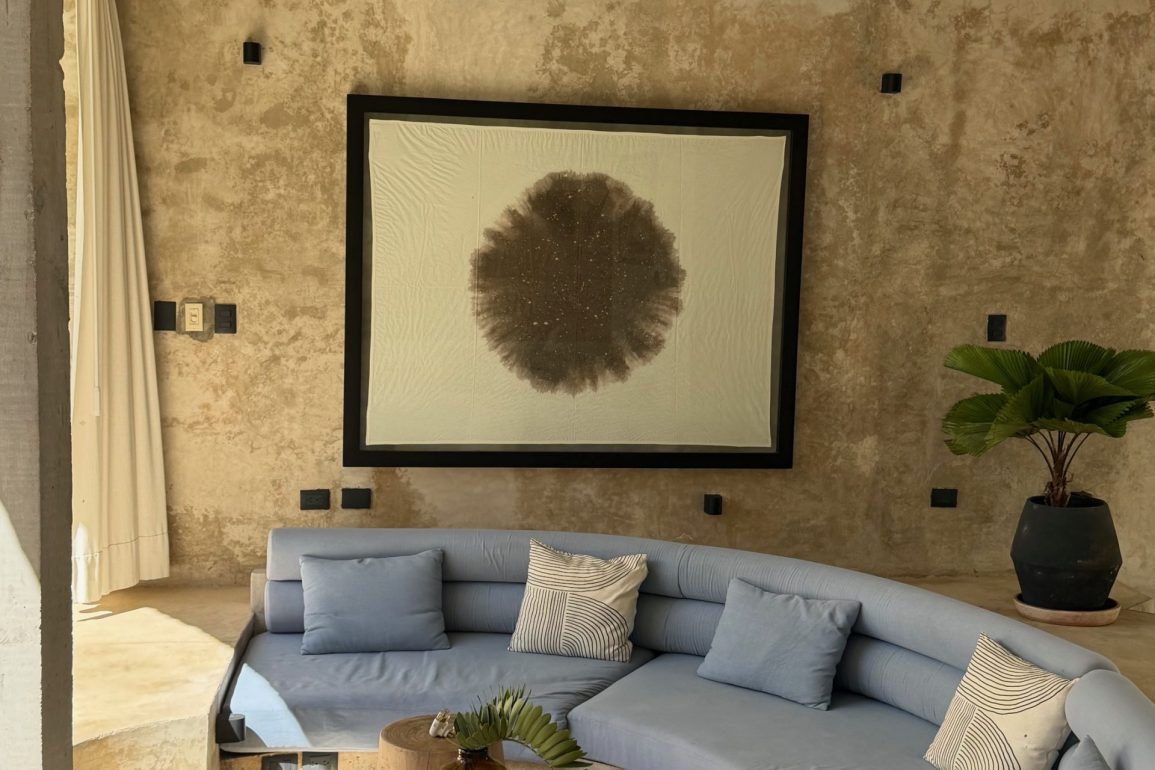
My room felt less like a bedroom and more like a continuation of the architecture. No decorative filler. No performative “Mexican” gestures. Just material. Scale. Height. A bed placed exactly where it should be. The plaster carrying from one space to the next so nothing felt interrupted.
At night, the house changes. The concrete cools. The air moves differently. You hear the city faintly beyond the walls but it never intrudes. Casa Soskil holds the noise at a distance.
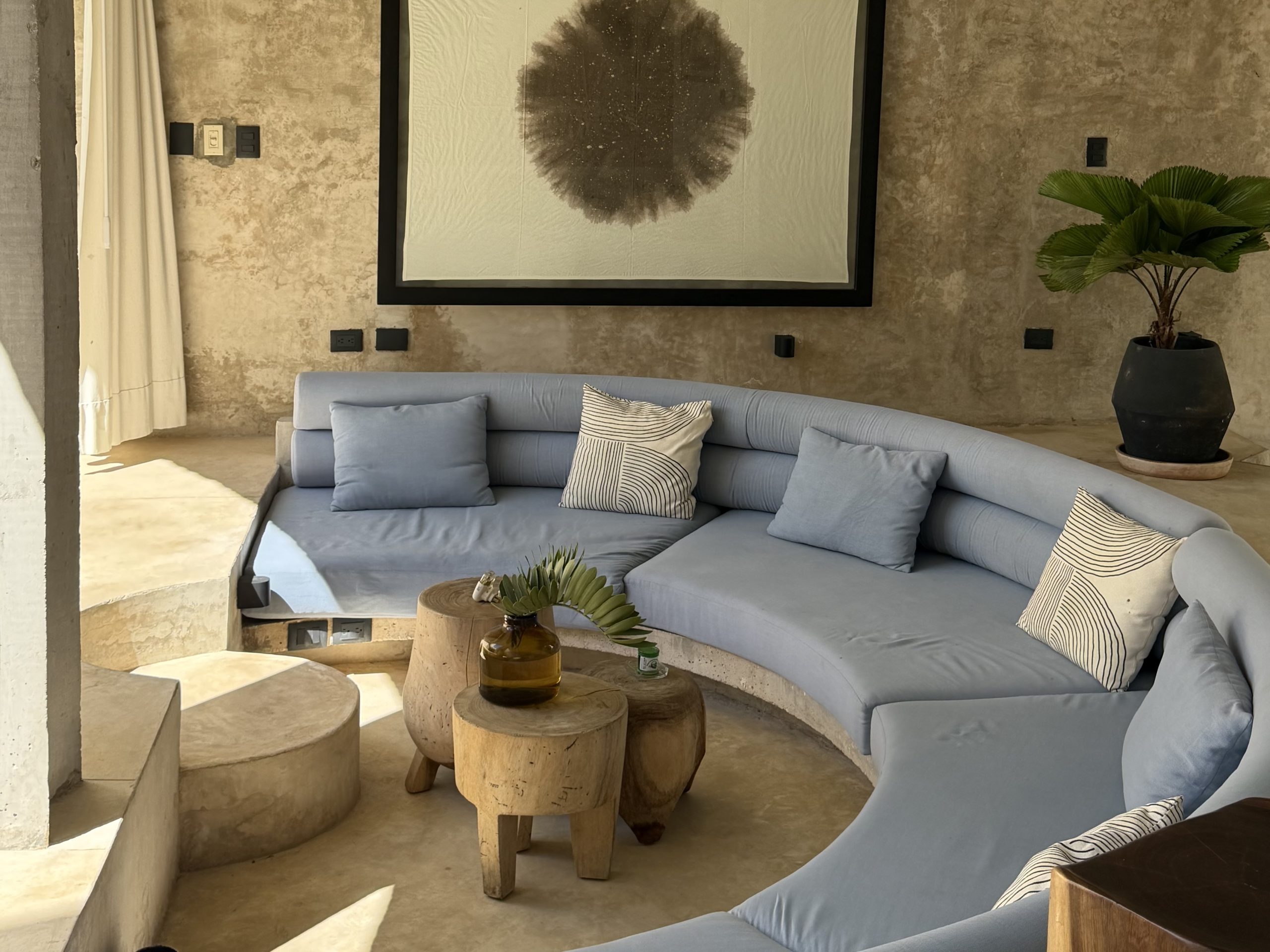
Mérida itself feels like a secret you’re slowly allowed into.

One night, I found myself at Huniik, stepping into a room lit almost entirely by candlelight — wax dripping down iron stands in thick layers, plaster walls catching flickers of gold. It felt intimate and deliberate, the kind of place where you don’t rush through dinner. I let the evening stretch.
The next night, I went to 130° Steakhouse, and the atmosphere shifted completely. A glowing circular terracotta wall framing the dining room. A tree rising through the floor like the architecture made space for it on purpose. I ordered agnolotti, shaved black truffle falling generously over buttered folds of pasta. It was indulgent without being loud — precise, intentional.
And somewhere between candlelight and truffle, I realized Mérida doesn’t try to entertain you. It builds atmosphere and lets you step into it.
By the time I left Mérida, I realized Casa Soskil had done what the best architecture always does — it recalibrated me. It made the outside world feel louder. Faster. Less considered.
And in October, under that thick Yucatán sky, that felt like the entire point.